
Your Network's Edge®
Products A-Z
You are here

Industrial Networking Solutions: The RAD Networking Products That Make It Happen
RAD offers a wide range of networking products as part of its Service Assured Access and Service Assured Networking solution portfolios. Below you will find all RAD products, conveniently sorted alphabetically. To learn more about our best-of-breed products for various networking platform market needs, see our Service Providers and Critical Infrastructure lobbies.
Find Products by Name
Featured Products

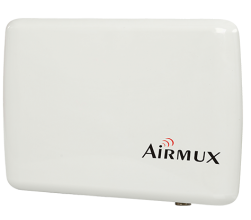
Airmux-400
The Airmux-400 radio systems incorporate advanced features, such as MIMO, OFDM and high modulation schemes. Furthermore, unique air interface capabilities ensure optimal performance and high spectral efficiency in dense radio environments and multipath conditions. This makes the Airmux-400 ideal for utilities AMI/DA backhaul, public safety and government backhaul, and transportation (highways and railways backhaul). Airmux-400 products comply with worldwide regulations and standards and are deployed globally by leading service providers, as well as operators of public and private networks requiring high-capacity connectivity.
Airmux-5000
Featuring up to 750 Mbps aggregated sector capacity and a range of up to 40 km (25 miles), a single Airmux-5000 base station supports up to 64 remote subscriber units (SUs) with multi-band operation, making it ideal for:
- Service providers and ISPs, offering IP backhaul and 4G/broadband access for remote, rural and underserved communities
- Private networks requiring high capacity inter-branch connectivity for university campuses, healthcare organizations, government institutions, large enterprises and public establishments
- Security and surveillance applications requiring aggregation and backhaul of traffic from multiple colocated HD cameras
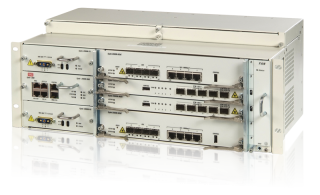
Egate-2000
The Egate-2000 is typically deployed in a central location to aggregate traffic from remote devices, such as RAD’s RICi Ethernet over TDM smart NTUs. Together, they form a complete Carrier Ethernet over TDM access solution from the service provider's central site to the customer premises. Ideal for IP DSLAM backhaul applications, the Egate-2000 leverages existing PDH/SDH/SONET infrastructure to deliver carrier-class Ethernet services to sites where native Ethernet is not available.
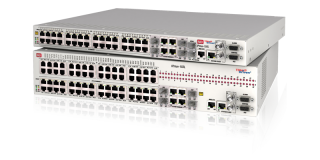
IPmux-155L
Working opposite CPEs, such as the IPmux-24, IPmux-2L, IPmux-4L, IPmux-4LGE and MiTOP-E1, the IPmux-155L functions as a pseudowire termination unit and sends TDM pseudowire bundles from remote units to SDH/PDH backbones while Ethernet traffic is directed to packet networks. Featuring multi-standard pseudowire capabilities and a wire-speed, non-blocking Ethernet switch, the IPmux-155L hub-site pseudowire access gateway allows enterprises to replace expensive leased lines with cost-effective packet transport and offers an ideal solution for economical PSTN access and PBX backhaul, including standards-based ring topology.
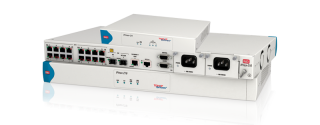
IPmux-24, IPmux-216
The devices’ compact design, ease of installation, and advanced traffic management capabilities enable carriers to extend their services from legacy backbones over greenfield packet networks, without affecting customer experience or replacing existing end-user equipment. They also allow service providers to add traditional leased line services to their Layer 2 portfolio and permit enterprises to reduce their IT expenses on PSTN connectivity and branch-to-branch communications. In addition, they support cellular operators in migrating their services to economical packet switched backhaul while maintaining the mobile network’s stringent synchronization requirements.
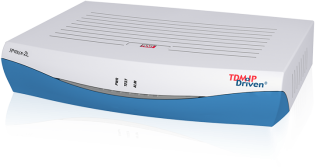
IPmux-2L, IPmux-16L
Using TDM pseudowire technology, the IPmux-1E delivers ISDN BRI, echo-cancelled E1/T1 or FXS/FXO/E&M services over packet transport, in addition to enabling transparent LAN bridging. It supports carriers in their migration to next-generation networks by allowing them to continue generating revenues from their ongoing legacy services over PSNs. The ease of installation and support for legacy and next-generation Ethernet and IP-based services make it ideal for small and medium-size enterprises (SMEs).
Follow us on